The Container of Good Intentions: A Full Investigation Into Leftovers You Were Never Going to Eat
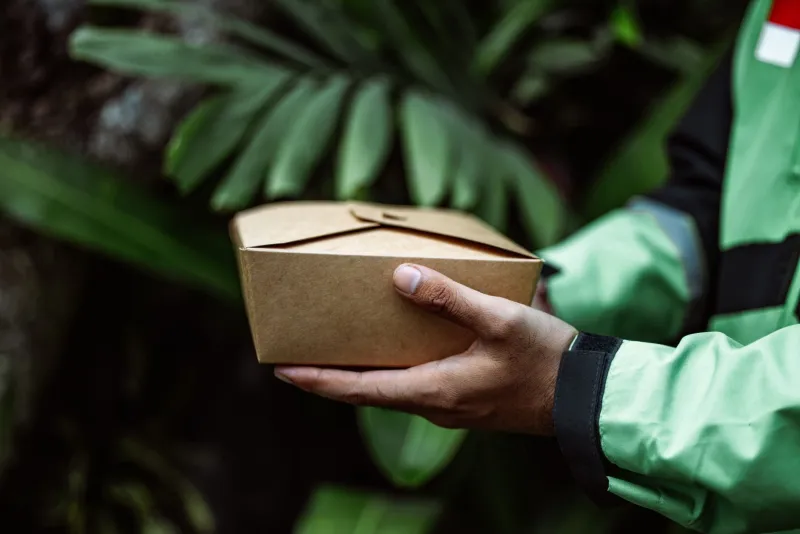
Let the record show that you meant it. When you asked the server for a to-go box, you were not performing optimism. You were not going through the motions of a person who packs leftovers. You genuinely believed, with real conviction, that tomorrow's lunch was handled. You had a plan. The plan was half a chicken sandwich and some fries that were already getting soggy but would totally crisp back up in the air fryer.
The fries are still in there. It is Friday.
The Packaging Ceremony and What It Represents
The leftover boxing ritual is one of the most sincere acts of self-belief in modern American life. You carefully transfer the remaining portion into the container. You press the lid down with both hands. You may even mentally calculate the calorie situation, which is a level of future-planning that your actual future self will find hilarious.
At a restaurant, there's a specific moment — right after the server sets down the to-go container — where you feel genuinely responsible. Organized. Like a person who does not waste food or money, who has a whole system, who is, frankly, crushing adulthood. You carry the bag out to your car with the energy of someone who packed their lunch the night before.
You have never, in your adult life, consistently packed your lunch the night before.
The Tuesday-to-Thursday Emotional Arc
Tuesday night: The leftovers go in the fridge. You are confident. The container occupies prime real estate on the second shelf, front and center, where Future You will absolutely see it first thing and feel grateful.
Wednesday morning: You open the fridge, see the container, and feel a small warm pulse of satisfaction. Lunch is handled. You close the fridge. You do not take the container with you to work because you tell yourself you'll come back for it, which is not a thing you do.
Wednesday noon: You are hungry. The container is at home, twelve minutes away. You open DoorDash. You tell yourself this doesn't count because you'll definitely eat the leftovers for dinner.
Wednesday evening: You are not hungry enough for a full meal, so you eat crackers and some cheese you found in the back of the deli drawer. The container watches from the second shelf.
Thursday: You open the fridge. You look at the container. You look at it for longer than necessary, the way you look at a text you've been avoiding. You close the fridge. You order Chipotle.
The Reheated Salmon Problem
Some leftovers never had a real future. You know this, and yet the packing happens anyway, because the alternative — leaving food on the table — feels wasteful in a way that packing it and throwing it away four days later apparently does not.
The reheated salmon is the clearest example. You ordered it at a nice dinner, ate two-thirds of it, and boxed the rest with the energy of someone who has a sophisticated relationship with fish. But reheated salmon at your desk on a Wednesday requires a version of you that is (a) indifferent to the opinions of coworkers, (b) someone who owns actual Tupperware rather than a flimsy restaurant container, and (c) a person whose office microwave does not turn every fish-reheating into a building-wide announcement.
That version of you does not exist on a Wednesday. You knew this on Tuesday. You packed it anyway.
The Permanent Resident
Every refrigerator eventually develops what can only be described as a permanent resident: a container so long-standing that it has transitioned from leftover to fixture. You stop seeing it as food and start seeing it as part of the fridge's architecture. It's just there, behind the orange juice, occupying space with the quiet dignity of something that has given up being eaten and has simply decided to stay.
Opening it is no longer an option you seriously consider. It has moved past the point of assessment. You are not going to open that container. The container knows you are not going to open it. You have reached an understanding.
The container will be dealt with during the next full fridge cleanout, which is scheduled for sometime between now and never.
The Fictional Future Self Who Eats All of This
At the center of every leftover tragedy is a character who deserves more examination: the future version of you who apparently has both the appetite and the organizational capacity to eat everything you've saved.
This person wakes up excited about reheated stir-fry. They bring soup to work in a proper insulated bag. They eat the leftover birthday cake before it goes stale and do not find this sad. They finish the second half of the burrito within a reasonable timeframe. They are, by every measurable standard, a more functional adult than the one currently reading this article.
You have been promising to become this person since approximately 2014. The gap between who packs the leftovers and who was supposed to eat them has never meaningfully closed. Every Tuesday night you box something up with full sincerity, and every Thursday afternoon you throw it away with the quiet, resigned dignity of someone who has made peace with their own patterns.
The container goes in the recycling. You order dinner. Tomorrow, you tell yourself, you'll cook something and actually eat the leftovers this time.
The fridge is ready. It has heard this before.
Yep, that's a thing.