Human Contact Protocol Error: Why Every Greeting Now Feels Like a Diplomatic Incident
The Great Greeting Malfunction of 2024
Something broke in the collective American social consciousness sometime around March 2020, and we're all still running on corrupted greeting software. What used to be automatic — the simple, universal handshake — has become a real-time negotiation that requires the diplomatic skills of a UN peacekeeping mission.
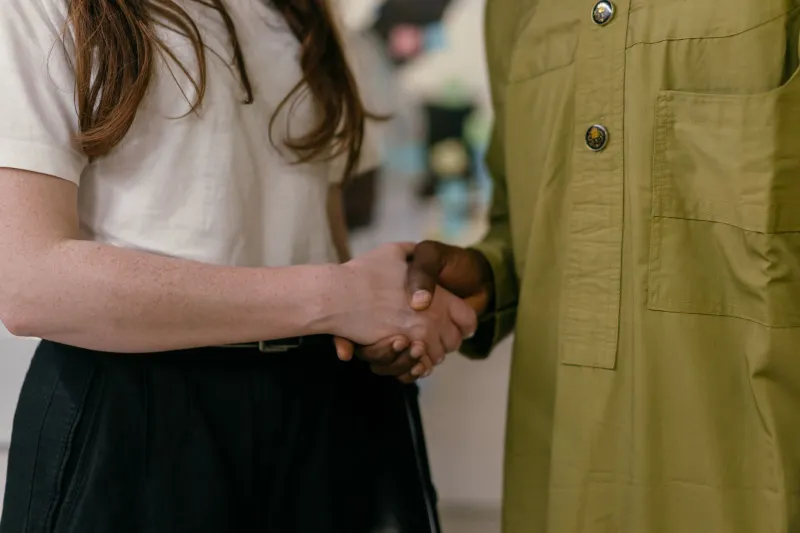
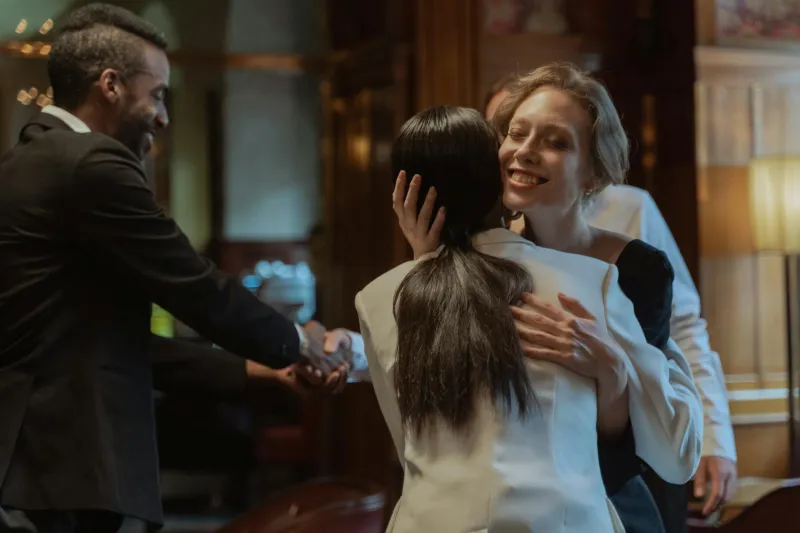
You approach someone you haven't seen in a while. They extend their hand. You're already leaning in for a hug. They see you leaning and abort the handshake to reciprocate the hug, but you've seen their hand and are now switching to a handshake. You both end up doing this awkward half-hug, half-handshake thing where you're patting each other's forearms like you're checking for broken bones.
Welcome to the new America, where every greeting feels like you're both trying to remember how to be human.
The Announcement Strategy
Some of us have started narrating our greeting intentions like we're air traffic controllers. "Coming in for a hug!" "Handshake incoming!" "High five situation!" Because apparently the only way to avoid the greeting disaster is to treat every social interaction like you're guiding a plane to safety.
You find yourself doing this with people you've known for years. Your own sister. Your mailman. The barista who's seen you every Tuesday for three years. Everyone gets the full verbal greeting protocol because we've all been traumatized by too many failed physical interactions.
The really committed folks have started making eye contact and doing a little preview gesture — holding up their hand to indicate "handshake mode" or opening their arms to signal "hug incoming." We've basically turned human greeting into charades, and somehow this feels more natural than just... winging it.
The Fist Bump Wildcard
Then there's the fist bump — the greeting equivalent of playing it safe with vanilla ice cream. It seemed like the perfect solution during the height of everything. Clean, simple, socially distanced. But now the fist bump exists in this weird liminal space where it's either totally appropriate or makes you look like you're trying too hard to be casual.
You offer a fist bump to your college roommate and they look at you like you just tried to sell them cryptocurrency. You go for a handshake with your neighbor and they leave you hanging while they form a fist, creating this bizarre moment where your open palm is just... hovering there, confused and rejected.
The fist bump has become the greeting equivalent of wearing socks with sandals — technically functional, but nobody's quite sure if it's socially acceptable.
The Hug Calculation Matrix
Hugging used to be simple. Family, close friends, people you haven't seen in forever — hug territory. Everyone else — handshake zone. Clean boundaries, clear protocols.
Now every potential hug requires a complex calculation that happens in approximately 0.3 seconds. How well do you know this person? When did you last see them? What's their comfort level? What's YOUR comfort level? Are you in a professional setting? Is this person a hugger? Are YOU a hugger? Did you used to hug this person? Have the rules changed?
You're running this entire algorithm while walking toward someone, and by the time you've processed all the variables, you're already in greeting range and you still don't know what you're doing.
The Workplace Wildcard
Office greetings have become their own special category of confusion. Pre-2020, you shook hands with clients, maybe hugged a coworker you were genuinely friends with, and nodded at everyone else. Simple.
Now you're standing in a conference room with people you've worked with for years, people you've been in Zoom meetings with for months, people you've shared way too much personal information with during virtual coffee breaks, and nobody knows what to do with their bodies.
Do you hug the coworker who helped you through your divorce via Slack? Handshake the client you've been joking around with on video calls for eight months? Wave at everyone like you're the Queen of England? The professional greeting landscape is a minefield of uncertainty.
 Photo: Queen of England, via c8.alamy.com
The Family Exception
Even family gatherings aren't safe. You hug your mom, obviously. But what about your cousin you see twice a year? Your uncle who's always been more of a handshake guy? Your teenage nephew who's at that age where any physical contact might cause him to spontaneously combust from embarrassment?
Family dinners now start with five minutes of greeting negotiations that look like an extremely awkward square dance. Everyone's moving around, trying to figure out the appropriate level of physical contact for their relationship with each person, while also trying to read everyone else's comfort level.
Your grandmother is hugging everyone because she's 87 and done caring about protocols. Your brother-in-law is doing the handshake-shoulder-pat combo with everyone because he's playing it safe. You're stuck in the middle, trying to match everyone else's energy while maintaining your own boundaries.
The 2 AM Replay
The worst part? You replay these failed greetings at 2 AM like they're scenes from a horror movie. That moment when you went for a hug and they stepped back. The time you offered a handshake and they were clearly expecting a fist bump. The awkward laugh-and-recover when you both went for the same thing but at slightly different angles.
These micro-moments of social confusion stick with you. You're lying in bed, staring at the ceiling, reliving a three-second interaction from six hours ago, wondering if that person thinks you're weird now because you couldn't execute a basic human greeting.
The New Normal
Maybe this is just who we are now — a society of people who've forgotten how to say hello with our bodies. Maybe we'll adapt, develop new protocols, create greeting apps that sync our preferences via Bluetooth.
Or maybe we'll all just keep doing this weird dance of social uncertainty, approaching each interaction like a puzzle to be solved rather than a simple human connection to be made.
Either way, we're all in this together — awkwardly, confusingly, with our arms in various states of extension, trying to remember how to be people.