The Arrival
Somewhere in the distant past—let's call it "last Tuesday"—you ordered something online with the urgency of someone whose life depended on it. Maybe it was a phone charger after yours finally gave up the ghost, or that organizational gadget that was going to revolutionize your entire existence. You paid for expedited shipping because waiting was simply not an option.
Twenty-four hours later, like a miracle of modern logistics, the package arrived. The delivery driver placed it carefully by your front door, probably assuming you'd open it immediately like a normal human being. They had no way of knowing they were delivering what would become a permanent household fixture, a cardboard monument to your own inexplicable behavior.
The Establishment
That first day, you brought the package inside with every intention of opening it. You set it down "temporarily" in the entryway, just until you could find the scissors or get settled or finish whatever incredibly important thing you were doing at that moment. The package sat there patiently, like a well-behaved pet waiting for attention.
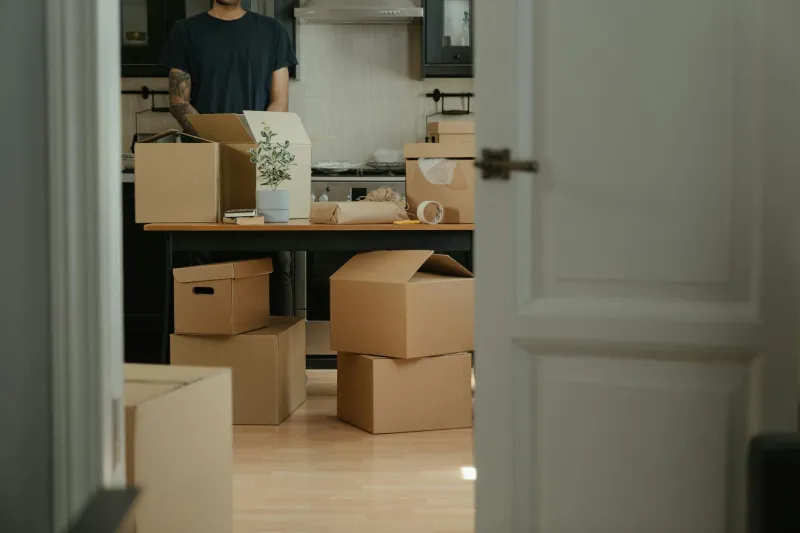
But then something magical happened: you walked past it. Not over it, not through it, but around it, as if it were a natural feature of your home's landscape. Your brain performed some incredible feat of spatial reasoning, automatically calculating the new traffic pattern required to navigate your hallway with this rectangular obstacle in place.
The Integration
By day three, the package had achieved something remarkable—it had become invisible. Not literally invisible, because you're still carefully stepping around it every single time you walk through that area. But psychologically invisible, like how you stop noticing the sound of your refrigerator humming or the way your car makes that weird noise when you turn left.
Guests start to notice it, though. They ask casual questions like "Oh, what did you order?" and you respond with the confidence of someone who definitely knows the answer: "Just some stuff for the house." The truth is, you've completely forgotten what's in there. It could be the solution to all your problems or a bulk order of rubber ducks, and at this point, both scenarios seem equally likely.
The Relationship Development
Somewhere around week two, your relationship with the package evolves from casual roommates to something deeper. You start referring to it in conversations: "Just set that down next to the package." "Watch out for the package when you come in." The package has become a landmark, a reference point in your home's geography.
You begin to develop genuine affection for it. The package has been reliable, consistent, never demanding attention or making noise. It's been the perfect houseguest—quiet, unobtrusive, and surprisingly good at staying out of the way while still maintaining a presence. Unlike your actual houseguests, the package has never eaten your food or left dishes in the sink.
The Psychological Barrier
The longer the package sits there, the more complicated opening it becomes. What started as a simple task—tear open box, remove contents—has transformed into something that requires mental preparation. You've built up the moment in your mind until it feels like a major life event that demands the right timing, the right mood, the right alignment of the stars.
There's also the growing suspicion that whatever's inside is no longer relevant to your life. The urgent need that prompted the original purchase has probably been solved by other means, or more likely, forgotten entirely. Opening the package might reveal just how unnecessary the purchase was, and nobody wants that kind of self-awareness on a random Wednesday evening.
The Avoidance Artistry
You've become a master of package avoidance, developing increasingly creative reasons why today isn't the day to open it. You need better lighting. You should clear off a surface first. You want to be in the right headspace to properly appreciate whatever's inside. You're waiting for a day when you have time to properly deal with the packaging materials and put everything away immediately.
Meanwhile, you continue to order other things online, which arrive and get opened immediately, because apparently your commitment issues are specific to this one particular package. New deliveries come and go, but the original package remains, like the elder statesman of your entryway, watching over the younger packages with quiet dignity.
The Breaking Point
Eventually, someone—probably your mother or a friend with no respect for your carefully constructed avoidance system—will force the issue. They'll ask pointed questions like "Are you ever going to open that?" or, even worse, "Can I open it for you?" The audacity of suggesting that someone else could violate the sacred bond between you and your package is almost offensive.
But their intervention creates the push you needed. With great ceremony and a surprising amount of anxiety, you finally retrieve the scissors and approach the package like you're defusing a bomb. The tape gives way easily, revealing... something you ordered three weeks ago and have absolutely no memory of wanting or needing.
The Anticlimax
Inside is inevitably something completely mundane—a set of drawer organizers, a phone case for a phone you no longer own, or that weird kitchen gadget that seemed revolutionary at 2 AM but looks ridiculous in the harsh light of your actual kitchen. You stare at it for a moment, trying to remember the person you were when you thought this item would change your life.
Then you carefully place it in a drawer somewhere, where it will live peacefully alongside all the other impulse purchases that promised to solve problems you didn't actually have. The package gets broken down and recycled, but not before you feel a small pang of loss for your cardboard companion.
Within a week, there's a new package in the entryway, and the cycle begins again. Because apparently, the only thing you learned from this experience is that you have an unlimited capacity for developing emotional attachments to unopened deliveries.