Supermarket Survivor: When Buying Milk Becomes an Existential Crisis
The Confident Entry
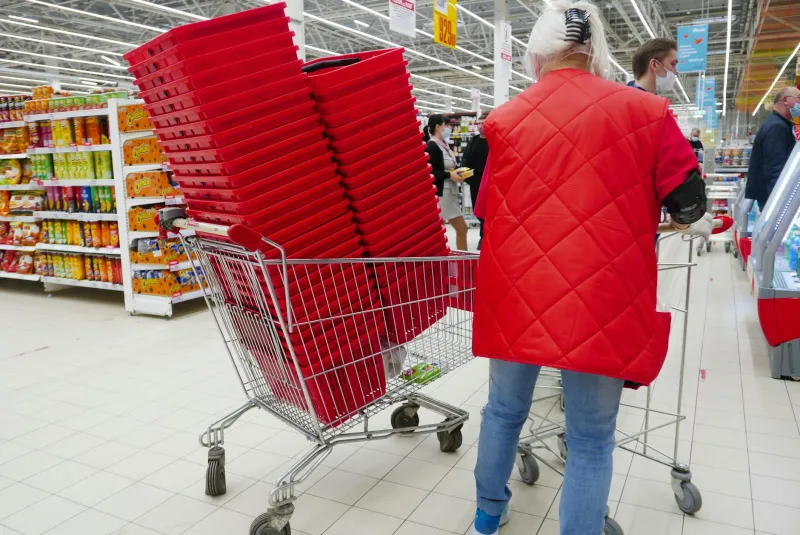
You walked into Kroger like you owned the place. Three items on your mental list: milk, bread, eggs. The holy trinity of basic adult functionality. You even left your cart at the entrance because carts are for people who don't have their lives together. You're going to power-walk through this store like a efficiency expert, grab your essentials, and be back in your car before the parking meter expires.
You've got this.
Spoiler alert: You do not, in fact, have this.
The Dairy Dilemma
Milk should be simple. It's literally just milk. But somehow you're standing in front of a dairy wall that looks like it was designed by someone who thinks choice paralysis is a competitive sport.
Whole milk? 2%? 1%? Skim? Oat milk? Almond milk? Cashew milk? Pea milk? When did we start milking peas? Who decided vegetables needed to become beverages?
There's organic, non-organic, grass-fed, hormone-free, locally sourced, and something called A2 milk that sounds like a highway designation. You came here for cow juice, not a dissertation on agricultural practices.
You grab the 2% because it seems like a reasonable compromise, then immediately second-guess yourself. Are you a 2% person? What does that say about you? Your grandmother probably bought whole milk and lived to 94. Maybe you're overthinking this.
You're definitely overthinking this.
The Bread Breakdown
Bread aisle. This should be easier.
It is not easier.
There are 47 types of bread, and they all claim to be the healthiest option ever created. Whole grain, multigrain, ancient grain, sprouted grain, grain-free grain. Someone is selling bread made from cauliflower, which feels like a personal attack on the concept of bread.
You pick up a loaf that costs $6 and has ingredients you can't pronounce. You put it back and grab the $2 loaf that your mom used to buy, then feel guilty about not prioritizing your health. You compromise with a $4 loaf that promises to be both healthy and affordable, which is probably a lie but feels emotionally manageable.
The Egg Equation
Eggs. How hard could this be?
Very hard, apparently.
Cage-free, free-range, pasture-raised, organic, brown, white, large, extra-large, omega-3 enriched. There are eggs that cost more per dozen than you spent on lunch yesterday. There are eggs with backstories longer than most Netflix series.
You're reading carton descriptions like you're choosing a life partner. "These hens live on family farms with access to outdoor areas where they can express natural behaviors." You didn't know you were supposed to care about chicken emotional wellness, but here we are.
A woman next to you grabs a carton without looking and walks away. You hate her confidence.
The Loyalty Card Labyrinth
You finally make it to checkout with your three items and $47 worth of things you definitely didn't need but somehow convinced yourself were essential. The cashier asks if you have a loyalty card.
Of course you don't have a loyalty card. You have seventeen different loyalty cards for seventeen different stores, but none of them are in your wallet. They're in your other wallet, in your car, or downloaded to an app you can't remember the password for.
"I can look it up by phone number," she offers helpfully.
You give her your number. Nothing.
You try your old number. Nothing.
You try your mom's number because sometimes you use that for things. Still nothing.
"Would you like to sign up?" she asks, while the line behind you grows longer and more impatient.
You agree to sign up, which requires providing information you don't have memorized, downloading an app that immediately crashes, and creating a password that meets seventeen specific requirements including at least one hieroglyph.
The Self-Checkout Betrayal
Next time, you think, you'll use self-checkout. Self-checkout is for independent adults who don't need human interaction to buy groceries.
Self-checkout is a trap.
The machine doesn't recognize your bananas. It thinks your bread is alcohol and demands ID. It's convinced you're trying to steal something because you moved an item from one part of the bagging area to another part of the bagging area.
"Unexpected item in bagging area," it announces to the entire store, like you're a criminal mastermind whose elaborate heist involved organic sourdough.
An employee comes over to fix the situation by scanning their badge and pressing the same buttons you've been pressing for five minutes. The machine immediately cooperates for them, like a pet that only listens to one family member.
The Exit Strategy
You finally escape the store forty-five minutes later with a receipt longer than most CVS receipts, which is saying something. You spent $73 on items that should have cost $15, and you still forgot the one thing you actually came for.
Your parking meter expired twenty minutes ago, and there's a ticket on your windshield.
As you load your groceries into the car, you notice the person parked next to you efficiently loading their cart full of bulk items, clearly someone who shops with a list and sticks to it. Someone who probably has their loyalty card memorized and knows the difference between cage-free and pasture-raised without having an existential crisis.
You hate them too.
The Inevitable Return
Driving home, you realize you forgot the milk.
The milk. The one thing that started this entire ordeal. You bought oat milk, almond milk, and something called "protein milk," but you forgot regular milk.
You'll have to go back tomorrow.
And the cycle begins again.