The Styrofoam Confession: Inside the Elaborate Shame of Asking for a To-Go Box
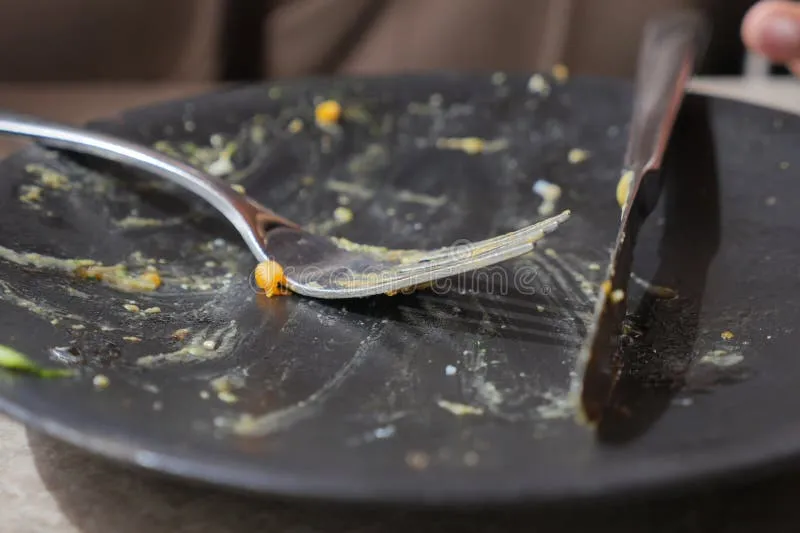
Photo: restaurant table leftover food plate server check, via thumbs.dreamstime.com
Nobody warns you about the mental calculus involved in asking a server to box up your remaining food.
One minute you're enjoying a perfectly normal dinner. The next, you're conducting a silent inventory of what's left on your plate — calculating volume, estimating reheating potential, weighing the social optics of carrying a white styrofoam clamshell through a crowded restaurant like you're transporting evidence.
This is a judgment-free zone. Mostly.
The Assessment Phase
It begins with the casual glance. You're not obviously looking at your plate. You're just... aware of it. There's about a third of an entrée left. Some pasta. A piece of bread that survived. Four or five fries that wandered to the edge of the plate and somehow avoided the main event.
The question forms slowly, like weather: Is this worth it?
You run the numbers. The entrée was $18. You've eaten maybe $11 worth of it, by your own informal food valuation system that has no basis in reality. There's real food left. Reheatable food. Lunch-tomorrow food, potentially.
But then the counter-argument arrives, and it is ruthless: it's four fries and some bread. Asking for a box for four fries and some bread is a statement about who you are as a person. You're not sure you're ready to make that statement.
The Negotiation With Yourself
You take another bite to improve the optics. Now it's five fries and some bread. You eat one more fry strategically, as if reducing the fry count will somehow make the remaining pasta more box-worthy. The pasta is not the problem. The pasta has always been box-worthy. It's the composition of the plate that's creating the psychological friction.
You look around the restaurant. Other tables have boxes. Normal people with boxes, eating their dinners, not spiraling. The couple at the booth across from you just asked for a box without any visible internal conflict and they have less food than you do. They have maybe three bites of salmon and what appears to be a single asparagus spear.
They look completely fine.
You flag down your server.
The Handoff and the Walk
Asking for the box is easy. It's one sentence and your server has heard it ten thousand times and has absolutely zero feelings about it. This is the rational understanding you have of the situation.
And yet when the server returns with the box, something shifts. Because now you have to pack it yourself, which involves a brief public performance of scooping your own food into a container at the table, and everyone around you is definitely watching, even though they are definitely not watching.
The pasta goes in fine. The bread goes in. You look at the fries. You look at the box. You put the fries in. You close the lid with the energy of someone sealing a document they're not entirely proud of.
Now you have to leave.
The walk through a busy restaurant holding a to-go box is its own specific experience. It announces something. It says: I was here, I ate, and I am continuing the relationship beyond this building. There's nothing wrong with this. It is, objectively, responsible and economical behavior. And yet the box feels heavy in a way that has nothing to do with its contents.
You make it to the car. You place the box on the passenger seat. You treat it with a level of care usually reserved for groceries that contain eggs.
The Refrigerator Chapter
The box goes into the fridge that night with genuine optimism. You position it prominently — front shelf, eye level, not buried behind the orange juice. This is a priority leftover. This is lunch.
Day one: you open the fridge, see the box, and decide you're not quite hungry enough for pasta right now. There's also some hummus. You eat the hummus.
Day two: the box is still there. You open it briefly to confirm it still looks like food. It does. You close it. You eat cereal.
Day three: you open the fridge with the specific energy of someone who has made a decision. You look at the box. You look at the shelf above it. You eat the last of the hummus with a spoon, standing over the sink, and close the refrigerator without making eye contact with the pasta.
Day four: someone — you, it's you — throws the box away without opening it. The fries were definitely not going to survive to day four. The pasta probably could have made it, but it didn't get the chance. The bread was always a long shot.
The box goes into the trash. The cycle is complete.
The Lesson That Never Sticks
You will do this again. Not because you've learned nothing — you've learned everything. You know how this ends. You know the box's trajectory from restaurant to passenger seat to fridge shelf to trash with the kind of certainty that only comes from repeated personal experience.
But next time there will be real food left. Next time it'll be different. Next time you'll actually eat it for lunch.
Next time you'll ask for the box.
Yep, that's a thing.